This tester is designed specifically for 6- and 8-cylinder engines with KE-Jetronic fuel injection. (will NOT work on the 2.3-liter four-cylinder engine). Instructions will also be provided so you can do a fuel pressure test on the LH-Jetronic fuel-injected engines of the 90s. Faults are located. Limited diagnostic advice is included, but keep in mind that there is no repair information in the included videos.
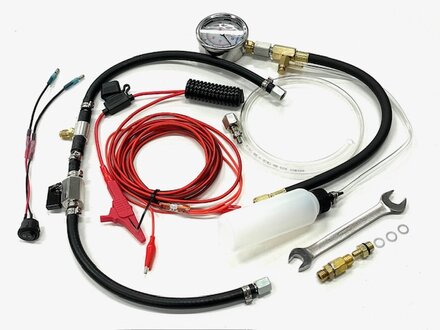
Product Details
The kit includes the following:
- CIS fuel injection tester with a multi-function shut-off valve
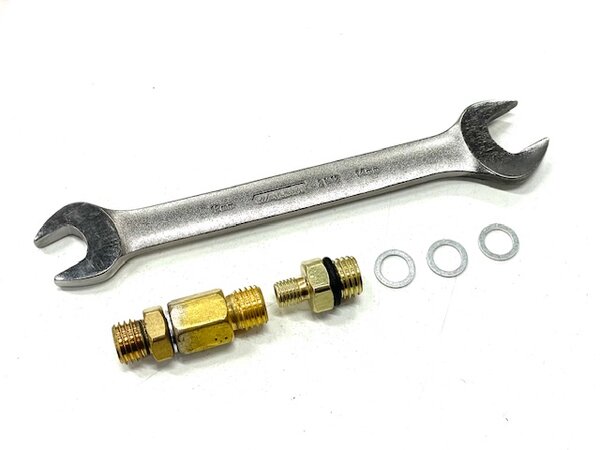
- Correct fittings to attach to the fuel distributor
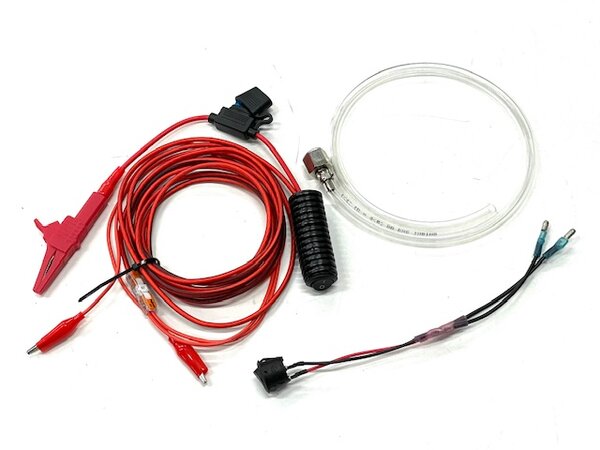
- Jumper leads to run the fuel pump with the engine off x 2
- Thin 14mm wrench for attaching the tester fittings
- Special hose for completing the fuel flow test
- Video instructions for KE-Jet and LH-Jet
The fittings can be easily installed with the thin-head 14 mm open-end wrench (custom cut).
A special fitting with an attached clear hose will help you complete the flow test. Two jumpers are included to allow you to do most of the tests without having to start the engine.
Do you have more than one Mercedes requiring different pressure testers? Are you not sure which one to order? Be sure to check out my ALL-IN-ONE kit that will test almost everything from the early 1970s to the late 1990s. See the related products below.
The stainless steel gauge is liquid-filled, which provides better accuracy, as well as protects the sensitive mechanism from abuse. Do not rest the gauge on the engine while testing; hang it off the engine somewhere in the engine compartment for viewing. Note that the gauge is not full of liquid, and that is normal. There must be some air in the gauge to allow the needle to move freely.
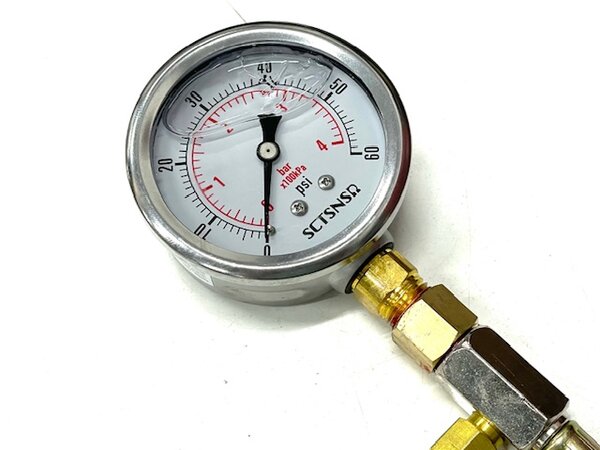
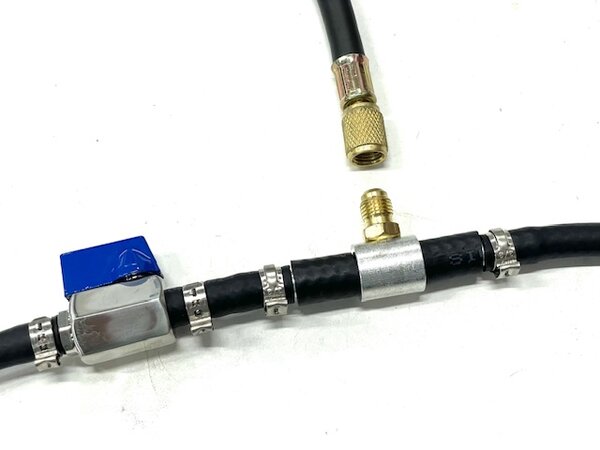
Kent has eliminated the quick-disconnect fitting at the tee on the lower hose. Quick-disconnect fittings have proven problematic over time. You will still be able to disconnect the gauge. When you screw it down onto the long hose, tighten it only finger-tight; do not use a wrench or pliers, or you'll damage the seal.
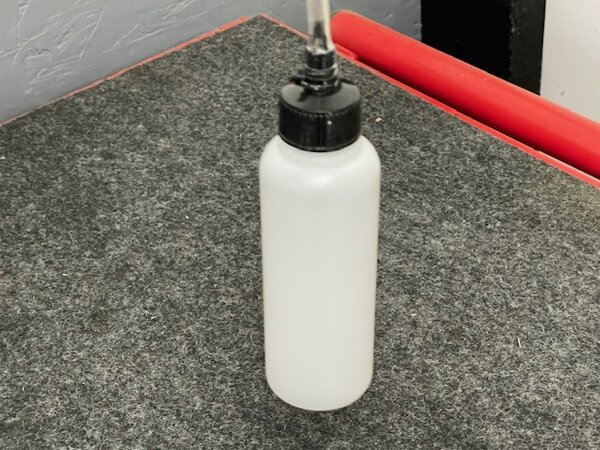
Regarding the bottle attached to the tester. This is to allow you to release pressure and fuel from the tester BEFORE you disconnect it from the engine. Please keep the bottle upright while doing this, as there is a very small hole under the cap that allows the bottle to vent pressure. If you lay the bottle on its side, it can leak fuel out very slowly.
Related Products:
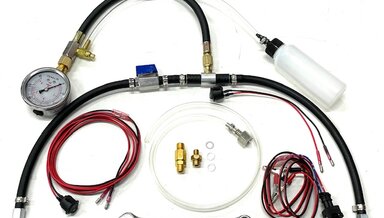
1976 to 1985 V8 K-Jetronic Fuel Injection Pressure Tester w/ Extras
This tester is specific to K-Jetronic V8 engines due to the special fittings and adapters it includes. These included M116 and M117 engines in the W116, R107, and early W126 chassis.
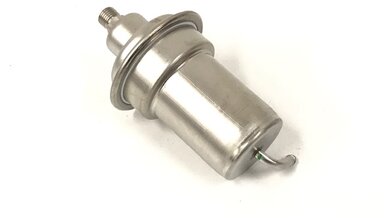
1976 to 1985 R107 W116 W126 Fuel Injection Accumulator
Also will work on (some but not all) 1976 to 1980 280SE, 280SEL, 280SL and 280E. Brand new aftermarket fuel accumulator for the 1976 to 1985 V8 engines. It is mounted near the fuel filter under the back end of the car and hardly ever gets replaced.
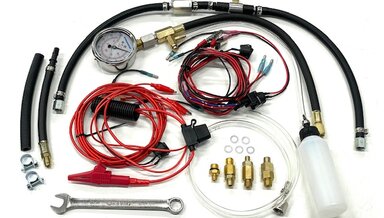
All-In-One 1970 to 1997 Bosch Fuel Injection Pressure Tester w/ Lots of Extras
New in April of 2026. This is the "whole ball of wax," including 10 free on-demand training videos. Kent put this kit together for those enthusiasts who own multiple classic Mercedes from the 1970s through the 1990s. Fuel Injection back then was not as reliable as it is now.
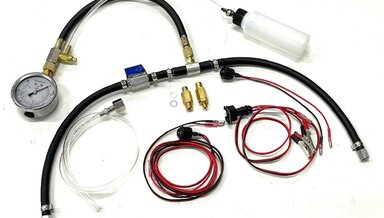
M110 6-Cylinder Fuel Injection Pressure Tester with Instructions
Why do a fuel system flow and pressure test? Without one, you will not know if your fuel injection is working properly. This is even more pronounced on K-Jetronic engines that incorporate a warm-up regulator. And guess where that is located on the M110 engine?
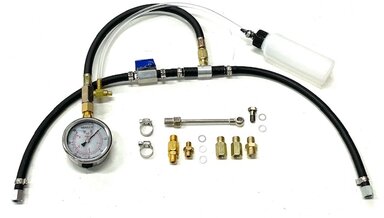
Universal Bosch CIS Fuel Injection Tester for Most 1976 to 1993 models with K-Jetronic or KE-Jetronic
This kit requires prior knowledge of Bosch CIS or a willingness to learn on your own. It may also require that you "fabricate" a fitting or two for your own engine. The challenge of getting my tester to work on these engines comes down to the required attachment fittings.

KE-Jetronic Fuel Injection Troubleshooting Multimeter w/ Special Attachments
This high-quality meter can test all types of automotive electrical circuits, but Kent has discovered it is particularly well suited for testing Bosch KE jetronic fuel injection components on those CIS models from 1984 to 1993.